Introducing Session Replay from Sentry: Bridge the Gap between Code and UX
We’re making Session Replay generally available to all Sentry users. Remove the guesswork from troubleshooting by seeing video-like reproductions of what users experience leading up to and after an error or performance issue. Session Replay supports all web-based platforms.
In the early days of the web, writing web applications was simple. Developers generated HTML on the server using a language like PHP, communicated with a single relational database like MySQL, and most interactivity was driven by static HTML form components. While debugging tools were primitive, understanding the execution flow of your code was straightforward.
In today’s modern web stack it’s anything but. Full stack developers are expected to write JavaScript executing in the browser, interop with multiple database technologies, and deploy server side code on different server architectures (e.g. serverless). Without the right tools, understanding how a user interaction in the browser cascades into a 500 server error deep in your server stack is nigh-impossible. Enter: distributed tracing.
How we grew Sentry's monthly active users by rethinking invitations
At its core, Sentry is a tool that alerts you to defects in your production software. But it does more than blast stack traces into your inbox: Sentry provides…
How we grew Sentry's monthly active users by rethinking invitations
At its core, Sentry is a tool that alerts you to defects in your production software. But it does more than blast stack traces into your inbox: Sentry provides powerful workflows to help your team determine root cause, triage issues to your team, and keep tabs on ongoing concerns with comments and notifications. At the end of 2019, the Growth team made it our mission to make it easier for our users to invite their teammates to join them on Sentry. Our theory: improving the user experience of inviting users, as well as democratizing the process to include all team members would lead to a significant increase in team-wide adoption. (Narrator: it did.)
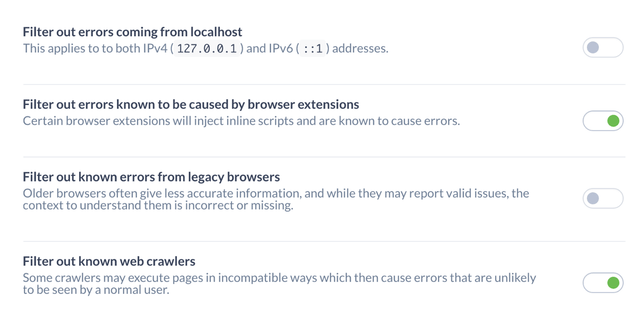
Spare your inbox from noisy unwanted errors with these helpful tips for reducing JavaScript error noises to make it easier to identify high-priority issues.
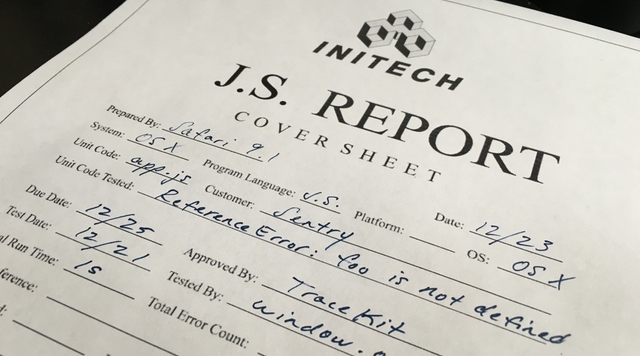
If you’ve worked with the JavaScript `onerror` event before, you’ve probably come across the following: "Script error." Learn more about what a js scripterror is here.
How to write bulletproof function wrappers in JavaScript
In our client JavaScript SDK – Raven.js – we make use of a lot of function wrapping. We even provide a utility API method, , that automatically wraps a…
Capture and report JavaScript errors with window.onerror
onerror is a special browser event that fires when JavaScript errors are found. Learn more here about how to capture JavaScript errors with window.onerror.
We’ve just released version 2.0.0 of our client JavaScript integration library, Raven.js. This version introduces some important major changes from 1.3.0.…
Debuggable JavaScript in Production with Source Maps
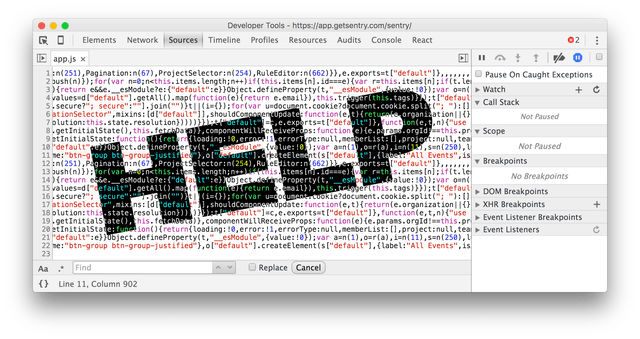
Today, the code you use to write your application isn’t the same code used to deploy it. Learn more here about using source maps to debug in production.
Earlier this month we announced a brand new version of Sentry, “version 8". Besides a brand new look and feel, Sentry 8 introduces some powerful new error…