In January 2024, I wrote about removing all advertising cookies and user tracking from sentry.io. It was eight months into the decision at the time, and we were still figuring out what broke and what surprised us. That post struck a nerve: it became one of the most-read things we’ve ever published, probably because everyone building or running a product on the web was watching the same cookie deprecation timeline and wondering what would actually happen if someone just ripped the bandaid off.
It’s been over two years now. We never put the cookies back (also never planned to). And the way we spend our growth budget has changed pretty dramatically as a result. Not because we planned some grand strategy from the start, but because removing cookies forced us to rethink where we put our money, and what we actually expected it to do. Roughly 70% of our growth budget now goes to awareness. Here’s a sample of what that actually looks like:
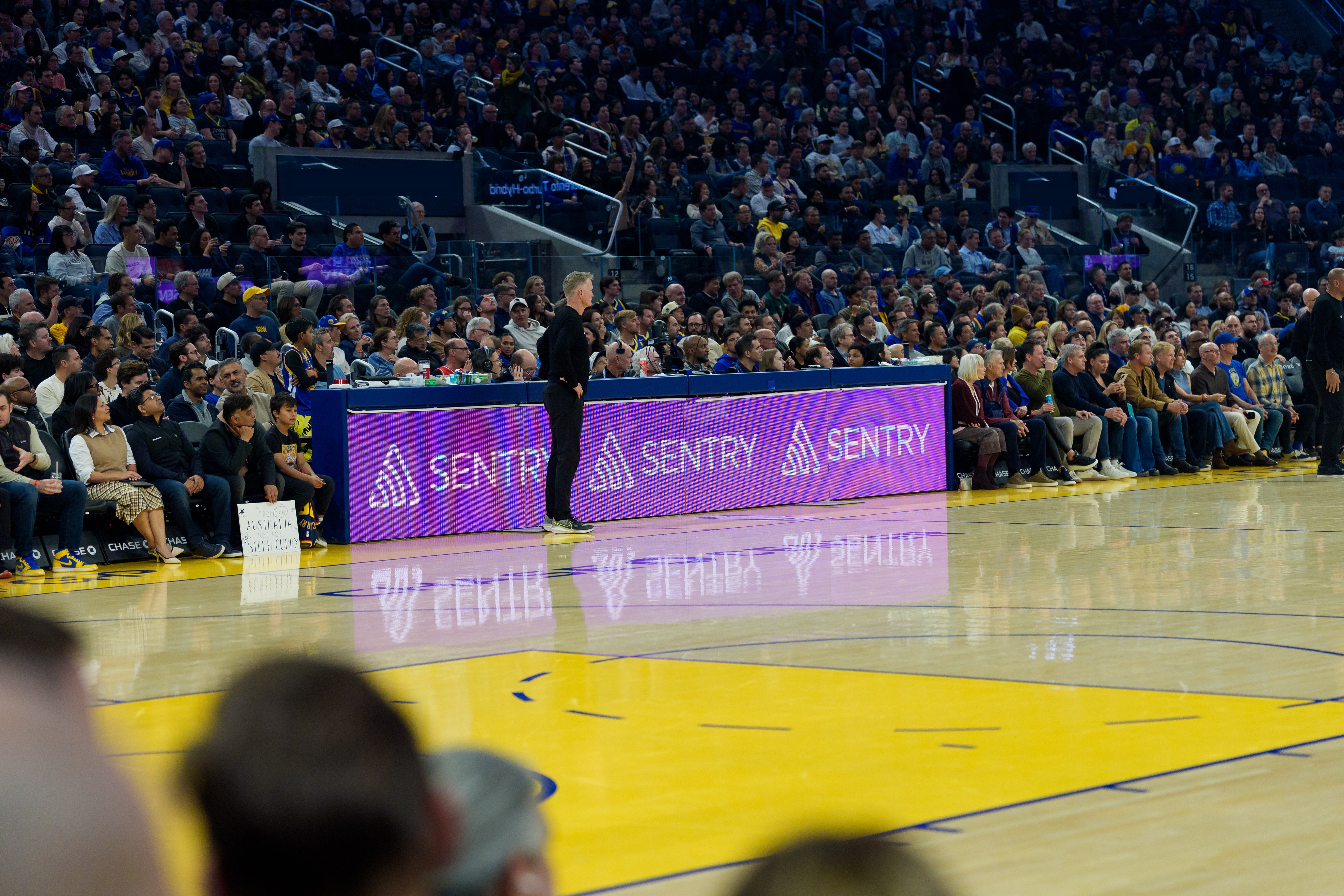
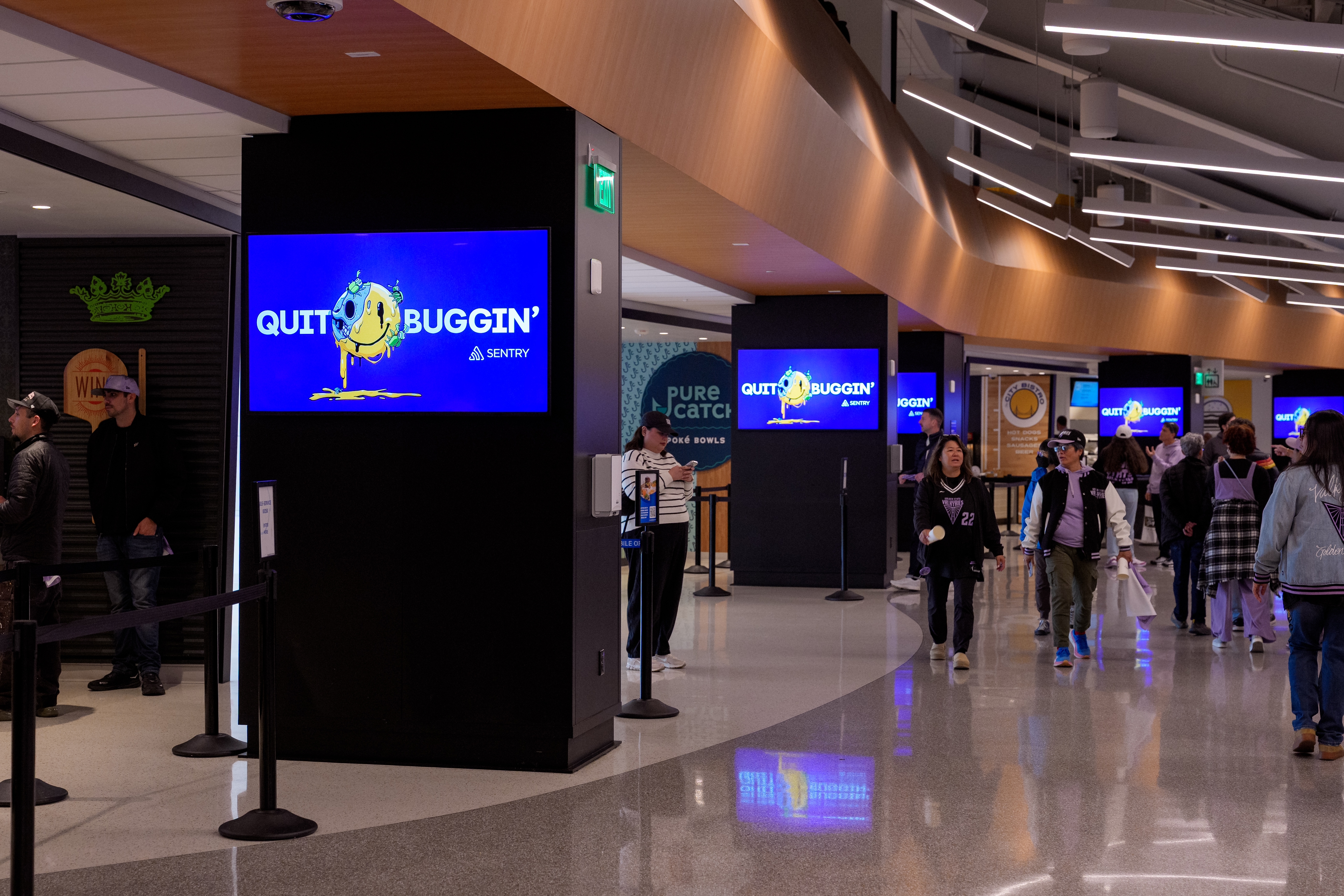
We signed a multi-year deal with the Golden State Warriors, Valkyries, and Chase Center.
Syntax.fm became part of Sentry in 2023 rather than starting our own corporate podcast.
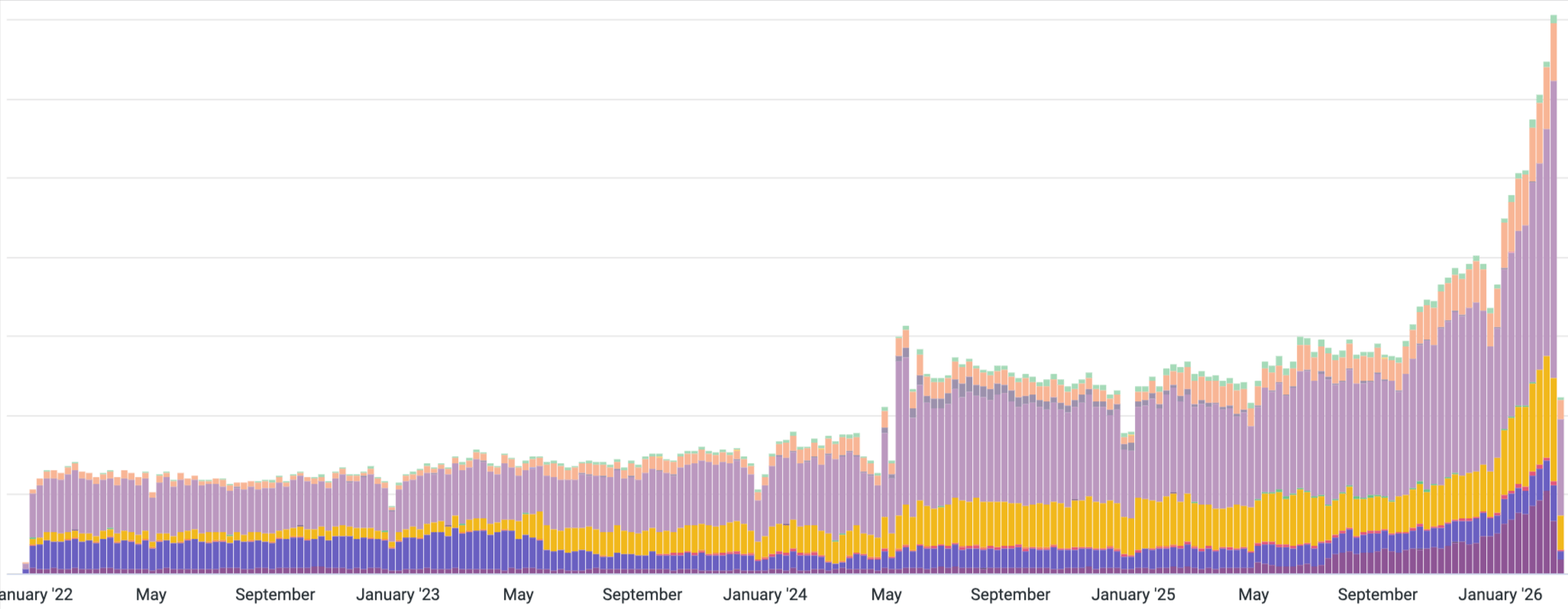
Along with the core business model and everything else we do, it’s safe to say these investments are working. Our new activated users have been growing exponentially.
This type of investment is pretty uncommon for a company that sells to developers, but we started a lot smaller before getting to these bigger plays. Here’s what I’ve learned so far.
The ways people discover software are changing
If you’re building a product, you’ve probably noticed this already: the ways people find and evaluate tools are shifting under everyone’s feet.
There used to be a fairly predictable path. Someone Googles a problem, clicks a few results, maybe reads a comparison post, signs up for a trial. You could grow a product by being good at showing up in that flow: writing content, running some ads, doing SEO.
That path is getting less reliable. Referral traffic from Google is down and zero-click searches are up. Semrush’s 2025 data shows around 60% of Google searches now end without a click to any website. When AI Overviews appear, organic click-through rates drop roughly 40%. People’s feeds and inboxes are flooded with increasingly competent AI-generated content and outreach, making it harder for anything genuine to cut through.
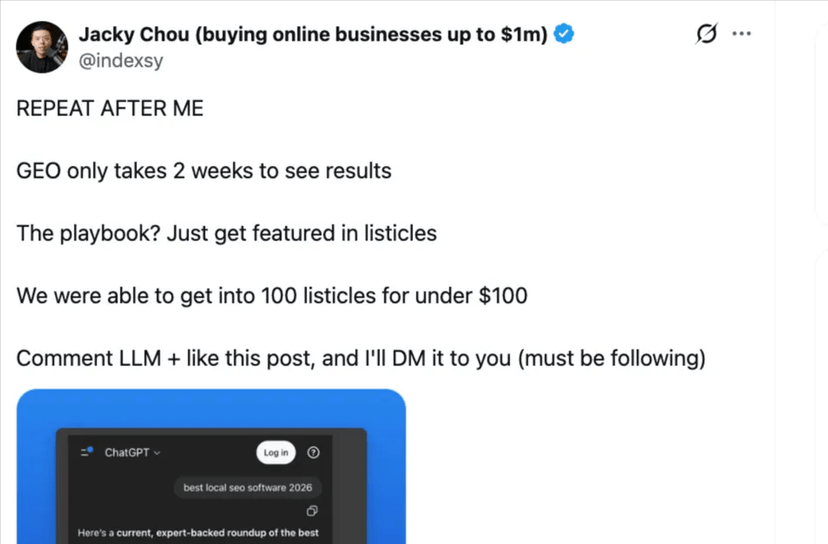
Meanwhile, companies are scrambling to figure out AEO/GEO (answer engine optimization / generative engine optimization — trying to get LLMs to recommend their products), because it’s a million if not billion dollar play for the future. Unfortunately the emerging playbook for that is flooding the zone with listicles, AI-generated templates, or taking the low road against competitors with comparison pages.
In short: there is less organic traffic to go around, LLMs are increasingly making recommendations on behalf of the people who used to click through to your site, and the internet is getting noisier. If you’re trying to get your product in front of people, the old playbook is degrading fast.
Because of all of this, we decided the way to grow Sentry isn’t by out-producing the noise. It’s by showing up in channels where authenticity still compounds, where real people actually spend time, where there’s emotional connection, and doing so in phases so we can actually see what’s working.
Awareness spend pays off differently now
One thing that changed how I think about where to spend: the channels that drive awareness are now the same channels that LLMs pull from when making recommendations.
YouTube has overtaken Reddit as the most frequently cited social platform in AI-generated answers. Data from Bluefish (reported in Adweek) shows YouTube appeared as a cited source in about 16% of LLM answers over the past six months, compared to 10% for Reddit. Goodie AI’s analysis of 6.1 million citations shows YouTube’s share of social citations roughly doubled between August and December 2025.
A developer watching a technical YouTube video where someone uses Sentry to debug a hydration error is one thing. An LLM citing that video when someone asks “what’s the best tool for catching hydration errors?” is another thing entirely. Brand awareness, discoverability, and LLM recommendations aren’t separate problems anymore — they’re the same problem.
This was one of the unexpected upsides I couldn’t have predicted when we removed cookies. In the original post I talked about how going cookieless forced us into self-reported attribution (asking signups how they heard about us) and holistic measurement (looking at blended data rather than pixel-level tracking). That mindset shift is exactly what made it possible to invest confidently in awareness, because these channels don’t show up cleanly in any tracking dashboard. If we’d kept our old attribution stack, I’m honestly not sure we would have had the conviction to make some of these bigger bets.
The trap of only doing what’s measurable
Here’s where I’ll get a little inside-baseball on how companies think about spending money to grow, because I think it’s useful context for anyone building a product, even a side project.
Research from the IPA (popularized by LinkedIn’s B2B Institute) suggests the optimal split between brand building and direct-response is around 60/40 in favor of brand. But most companies do the opposite; Refine Labs found that the typical company puts roughly 80% of budget into things with immediate measurable results (paid search, retargeting) and only 20% into things that build long-term awareness. The reason is simple: it’s way easier to justify spending money when you can point to a dashboard that says “we spent X and got Y signups.”
This leads to a cycle I’ve seen at multiple companies: you invest in SEO, paid search, and retargeting ads. Your dashboards show good results. You max those channels out. Growth flatlines. You restructure, expand topics, double down. It doesn’t move fast enough. Someone panics and calls for a rebrand or website overhaul.
The harder but more interesting question is: how do you measure someone seeing your product in a YouTube video, or hearing about you on a podcast, or noticing your logo on a billboard and then Googling you three weeks later? A Wynter survey found that 50% of B2B SaaS companies don’t even try to track brand awareness. Half the industry isn’t measuring it, while the channels that are measurable are getting worse.
At Sentry we’ve been fortunate to have leadership that sees the value in awareness spend, because internally it’s a hard sell at a lot of companies (you’re essentially asking for budget without a clean ROI story). When we removed third-party advertising cookies from our website (I wrote about that whole journey here), it stripped away our reliance on tracking data, which was equal parts frustrating as it was eye-opening. It forced us into a few habits that have ended up benefiting growth:
Trusting instincts. We all know intuitively that we’re influenced by what we see on YouTube, what we read on Reddit, what our peers recommend, even a well-placed billboard. But it’s hard to act on that when you can’t prove it in a spreadsheet.
Looking at holistic data. When we made a big investment in a top 5 tech podcast, we saw our unattributed, direct, and organic signups rise that same quarter. We didn’t need granular tracking to connect those dots; the overall numbers backed it up.
Not being afraid to test and fail. We have failed a handful of times on podcasts, influencers, and channels. But roughly every fail comes with one channel that opens up a lot of growth, a worthy tradeoff if you’re thinking a few years down the road.
A framework for how we invested
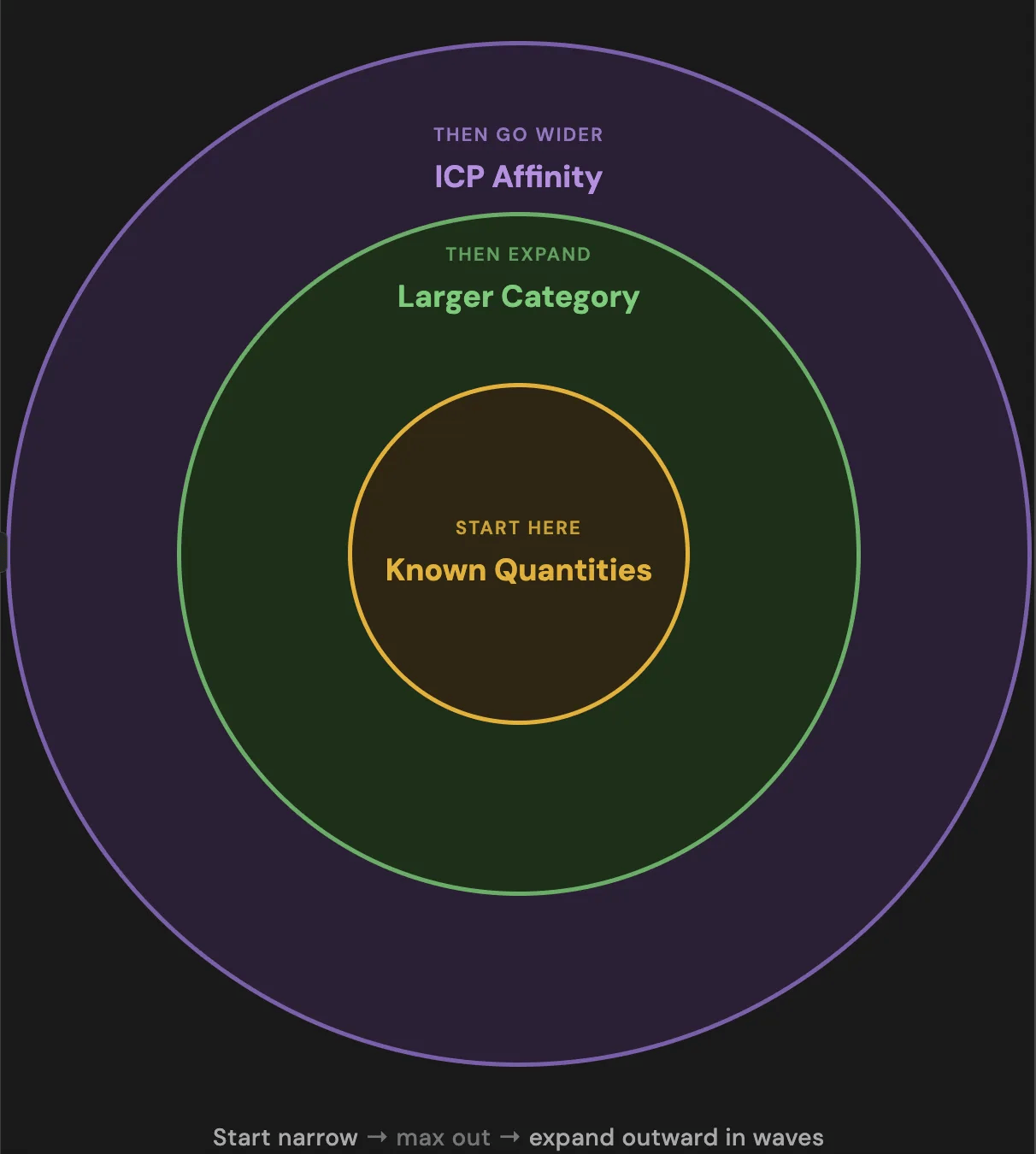
Here’s the general approach that’s worked for us at Sentry. It’s helped us stay close and authentic with our audience as we scaled. Think of it as concentric circles:
Start with known quantities first. Focus on influencers, podcasts, and newsletters that solely speak to the people you’re building for and nobody else. For us it’s developers, so we focus on highly technical content that no marketing team or salesperson would be interested in. Newsletters like TLDR Web Dev or Bytes, podcasts like Syntax.fm.
Then as you saturate those, go to the broader category. For us it’s tech: anyone interested in building applications.
Finally, figure out what your audience cares about beyond your category. We asked Reddit to map which other subreddits our target audience frequents. They came back with finance, tech, comedy, and sports (specifically basketball and F1). That insight led us to partner with the Warriors, Valkyries, and to sponsor podcasts like WTF1 and The Race. Seeing your brand sponsor the things your audience loves creates a deeper connection. Do more people than developers watch basketball? Sure. But the diehard devs in the Bay Area and beyond will hopefully see this and associate with Sentry on a deeper level because of it.
The key is to do this in waves and stages. If you do it all at once, you won’t know what worked.
Knowing if it’s working
None of this works if you’re not paying attention to timing: when a campaign goes live, how long it should take to see a response, and which of your signup channels should be moving.
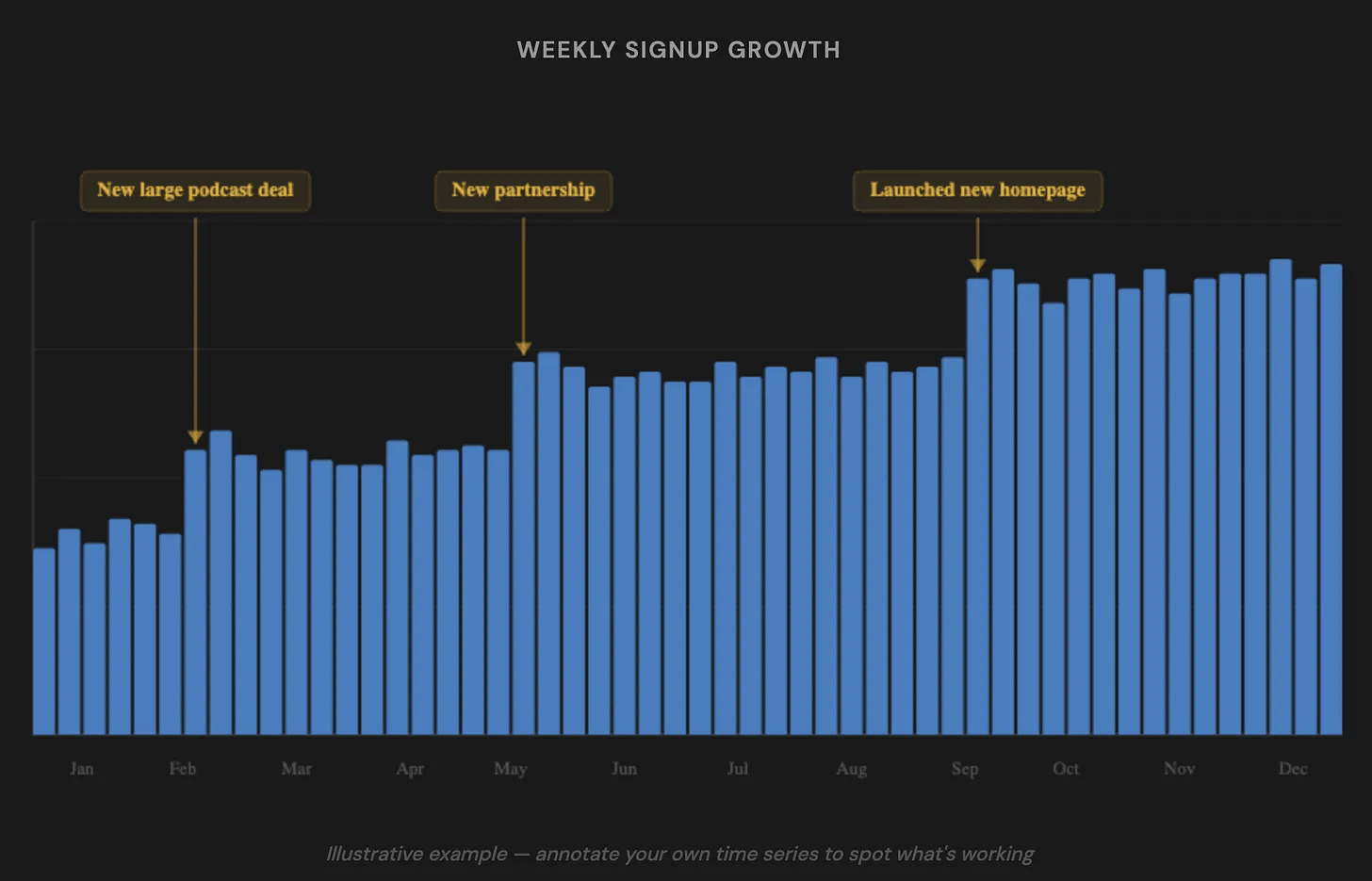
I like to take a weekly time series of our signups by channel and just annotate which weeks we do major things. It’s not perfect attribution. But it’s directional, and directional is enough to keep stacking good decisions while ditching experiments that don’t land. I don’t want to come off as flippant, but sometimes I think we overcomplicate this. Tracking awareness can be simpler than people expect.
Back in the cookies post, I mentioned that we salvaged about 50% of our attribution data after going cookieless and instituted a self-reported “how did you hear about us” survey. Two years in, that survey has become one of our most valuable data sources. It’s how we learned that YouTube was driving more awareness than we thought, that certain podcast sponsorships were landing, and that developer word-of-mouth was far more influential than any display ad campaign we ever ran. The irony of losing our tracking pixels and gaining better insight into what actually works hasn’t worn off.
Bottom line
These channels unlocked new levels of growth I didn’t fully see coming. I’m not saying this is the right approach for every company or that you should ditch measurement entirely. But if the predictable channels are plateauing, it’s worth experimenting with a phased approach: one investment at a time.
Two years ago we removed all advertising cookies and told ourselves we’d see what happens. What happened is that we stopped optimizing for what was easy to measure and started investing in what we actually believed would work. That led to us understanding our customers better, and that ultimately has led to so many learnings and growth booms along the way.
FAQs
Does removing advertising cookies hurt growth? ▾
Not in the long run. After removing all advertising cookies in mid-2023, Sentry's new activated users grew exponentially. The shift forced a reallocation toward brand awareness channels that proved more durable than performance marketing alone.
How do you measure brand awareness without tracking pixels? ▾
Sentry uses self-reported 'how did you hear about us' surveys, a weekly signup time series annotated with campaign launches, and holistic blended metrics. Directional data is enough to make confident decisions without pixel-level attribution.
What marketing channels work best for developer products? ▾
For Sentry, technical YouTube videos, developer podcasts like Syntax.fm, newsletters like TLDR Web Dev, Reddit, and out-of-home advertising have driven the most growth. The approach: start with channels that speak exclusively to your audience, then expand outward in phases.
Should you use Seer or just connect the MCP to your agent? A breakdown of what Seer, the Sentry agent plugin, the CLI, and coding agent handoffs each do — and when to reach for one over the other.
Five months after launch, Seer Agent can now take action on your behalf in Sentry, and pull in infrastructure data from outside Sentry to diagnose issues faster.
The all-or-nothing sendDefaultPii boolean is going away. dataCollection replaces it with a dial for each category of data, so you can keep the headers you debug with and drop the values you would rather not store.